Services and programs for parents and children
Public Health Services provides individual visits, classes, and groups in the home, clinic, and community setting to families who are pregnant or have infants and preschool children. Information, support, and referral to community resources are provided by public health nurses. Several of our programs are coordinated with social workers to provide a comprehensive program that addresses all aspects of social, emotional, and physical health as they relate to pregnancy, parenting, and child development.
Family Home Visiting Programs
Family Home Visiting is a service, provided by public health nurses (PHNs), offering home visits to partner with and support families during pregnancy and parenting. The PHNs work alongside families to promote a healthy pregnancy, a positive parent-child relationship, knowledge of parenting and child development, parental resilience, and referral to resources that provide basic needs and social supports. PHNs have been trained in and utilize the Maternal Early Childhood Sustained Home-Visiting (MECSH) program, an evidence-based home visiting model. Contact us for more information and for eligibility requirements.
Contact us at 507-328-7570 or email PublicHealthHCFIntake@olmstedcounty.gov for more information and eligibility requirements.
OR
Schedule a short phone or video call with a public health nurse to learn how family home visiting could help you and your family!
Newborn / postpartum visits (aka new baby visits) are available to all families with a new baby. The nurse visits families in their home during the first two weeks after the birth to offer teaching and support related to care of the baby, postpartum recovery of mom, and family adjustment.
Please call our Intake line at 507-328-7570 or email referrals to PublicHealthHCFIntake@olmstedcounty.gov
Women, Infants, and Children
WIC (Women Infants and Children) serves families with infants and children up to age five and pregnant and postpartum people. All families are welcome at WIC, including dads, grandparents, foster parents and working families. Learn more about WIC.
Milk Bank
Olmsted County Public Health Services is collaborating with the Minnesota Milk Bank to offer pasteurized human donor milk (PHDM) bridge bags to the Olmsted County community. These bridging bags are for families with an infant under 6 months who need a short-term supply of breastmilk to reach the goal of exclusive breastfeeding. To ask about the bridge bags, call WIC at 507-328-7555 or the Family Home Visiting program at 507-328-7570.
Caregiver information and tips
Parenting is a rewarding journey, but it can also be one of the most challenging roles you'll ever take on. Juggling work, responsibilities, and limited time can often leave parents feeling overwhelmed, frustrated, or even guilty. The resources below can help you navigate these challenges and find balance. For even more in-depth articles and assessments, visit CredibleMind.
Preparing for a new baby
Women and Infant Health Resources from MDH
The Minnesota Department of Health offers a hub of information and support programs focused on the well-being of women, infants, and families. Their women and infant health webpage includes trusted resources on:
- Breastfeeding
- Family planning and reproductive health
- Prenatal and postpartum depression
- Infant and maternal mortality
- Doula and midwifery services
- Newborn screening and follow-up
- Prematurity prevention
- Support for student parents
- WIC and women’s wellness
You’ll also find links to programs like the Follow Along Program and Pregnancy Risk Assessment Monitoring System, which help track and support child development and maternal health across the state.
A healthy pregnancy
Health Information Translations offers clear, easy-to-understand resources on pregnancy, childbirth, and caring for your baby. Topics range from prenatal care, healthy pregnancy tips, and labor signs to breastfeeding, safe sleep, and child safety. You’ll also find helpful guidance on postpartum recovery and common newborn concerns like crying, feeding, and vaccines. These materials are available in multiple languages to support families.
March of Dimes Resources
Whether you're planning for a baby, currently pregnant, or navigating life as a new parent, March of Dimes offers trusted information and compassionate support every step of the way. Their resources cover a wide range of topics, including:
- Planning for pregnancy and prenatal care.
- Labor and birth.
- NICU support for families with premature or sick newborns.
- Postpartum health and recovery.
- Parenting guidance for newborns and beyond.
- Coping with miscarriage, loss, and grief.
Explore articles, checklists, and expert-backed tips to help you make informed decisions and feel more confident through each stage.
Alcohol, tobacco, and other drugs
Avoiding alcohol, tobacco, and other drugs during pregnancy is one of the most important steps you can take to protect your baby’s health. Using these substances can increase the risk of miscarriage, low birth weight, developmental delays, and other serious health problems.
Minnesota WIC offers helpful guidance on staying healthy during pregnancy and avoiding harmful substances:
The CDC provides detailed information on the risks of smoking during pregnancy and why quitting matters at every stage.
The FDA explains what people should know about cannabis use during pregnancy and breastfeeding, including its potential effects on developing babies.
Nutrition and Prenatal Vitamins
Good nutrition during pregnancy supports your baby’s growth and helps you feel your best. Taking a daily prenatal vitamin with folic acid is also important to help prevent birth defects and support healthy development.
The Minnesota WIC program offers tips and information to help you eat well and get the nutrients you and your baby need:
Eating well during pregnancy
Prenatal Vitamins
Weight gain during pregnancy
Feeding your baby
Whether you choose to breastfeed, bottle-feed, or do a combination of both, the right information can help you feel more confident and supported. Minnesota WIC provides resources to guide you through each stage of feeding your baby:
Getting started with breastfeeding
First months of breastfeeding
Returning to work or school while breastfeeding
Bottle-Feeding Your Baby
Combination Feeding
For proper milk storage, labeling, and thawing instructions, refer to the CDC’s Human Milk Storage Guidelines.
Vitamin D is also essential for your baby’s bone growth and immune system. The CDC recommends that:
- Breastfed and partially breastfed babies get 400 international units (IU) of vitamin D daily, starting soon after birth.
- Formula-fed babies typically get enough from formula if they drink 32 ounces daily.
Vaccinations and Medication
Keeping your child up to date on vaccinations and using medications safely are important steps in protecting their health and development.
Minnesota Vaccines for Children (MnVFC) Program
Your child may qualify for free or low-cost vaccines through the MnVFC program. Use the form below to check eligibility:
Medication safety and poison prevention
Young children are especially vulnerable to accidental poisoning and medication errors. It’s important to store medicine safely and follow dosage instructions carefully.
The American Academy of Pediatrics educates parents and caregivers on how to safely store medicines, dosing safely, and what to do in an emergency to protect children.
The Minnesota Poison Control System is available 24/7 to provide expert advice for poison emergencies and questions about medicine safety.
Acetaminophen safety for infants and children
Acetaminophen is a common medication used to reduce fever and relieve pain in babies and young children—but giving the wrong dose can be dangerous. Poison Control provides clear guidance on how to use it safely, including correct dosing, measuring tools, and what to do in case of an overdose.
Firearm safety
If you have firearms in your home or your child spends time in homes where firearms are present, secure storage is essential to keeping children safe. Every year, thousands of kids gain access to unsecured guns—often with tragic results. Taking simple precautions can prevent accidental injuries and deaths.
The Be SMART for Kids campaign promotes responsible gun storage and encourages open conversations about safety. The SMART framework stands for:
- Secure all guns in your home and vehicles.
- Model responsible behavior around guns.
- Ask about the presence of unsecured guns in other homes.
- Recognize the role of guns in suicide.
- Tell others to be SMART.
Mother well-being
Postpartum depression is a serious condition affecting 10-15% of people after childbirth. It can lead to feelings of sadness, anxiety, and fatigue, making it difficult to bond with your baby or manage daily tasks. If you or your partner are experiencing signs of PPD, it's crucial to seek help from a therapist or psychiatrist. Remember, postpartum depression is treatable, and support is available—you don't have to face this alone. Find resources below or visit CredibleMind for more.
Mental Health Screening
CredibleMind Assessment: Mental Health Check-In
Baby sleep
Getting your baby to sleep and ensuring they have safe, restful sleep is crucial for their development and your peace of mind. Explore these trusted resources to guide you through the process of healthy sleep habits for your little one.
CredibleMind: Baby Sleep Resources
CredibleMind offers expert-backed articles and tips on helping your baby sleep, including how to establish a sleep routine, manage sleep disruptions, and create a safe sleep environment. You can also find assessments and resources tailored to both new parents and experienced caregivers.
Sleep tips from pediatricians
Healthy Children, powered by the American Academy of Pediatrics, provides evidence-based sleep guidance. Learn how to create a safe sleep space, recognize healthy sleep patterns, and manage issues like sleep regression or nighttime awakenings.
Child car seats
Olmsted County Public Health Services (OCPHS) supports families in keeping children safe while traveling by offering education, car seat installation assistance, and access to free car seats for eligible households.
Minnesota’s child passenger safety laws outline how children must be secured based on age, size, and developmental needs. OCPHS can help parents seek help understanding which car seat is appropriate and how to install it correctly.
This program provides:
• Free car seats for families who qualify through their health insurance
• Car seat education and installation checks for all families, regardless of insurance
• Guidance on choosing and using safe, appropriate seats
Eligibility for free car seats
You may be able to receive a free car seat for your child through OCPHS, depending on your health insurance and specific needs. The information below outlines who qualifies, how the program works, and what steps to take to receive a seat.
Who is eligible for a free car seat through Olmsted County Public Health?
- Families in Olmsted County with Blue Plus insurance may be eligible to receive a new car seat for children from newborn through 12 years old.
- Pregnant individuals enrolled in Medica are not eligible for car seat distribution through the county.
- All families in Olmsted County qualify for a no‑cost car seat check, regardless of insurance.
Car seat distribution through Blue Plus
- Car seats Olmsted County Public Health Services can distribute:
- Safety 1st onBoard FLX Infant Car Seat
- Cosco Scenera Extend rear-facing convertible
- Cosco Finale 2 in 1 combination
- Car seat distribution appointments take 60-90 minutes. Please have your car’s manual handy for this appointment if available.
- Information needed before scheduling an appointment include:
- Child’s name(s) and date(s) of birth (or parent’s name and due date if pregnant)
- Insurance information
- Current email and phone number
- Caregivers and legal guardians are required to pick up the car seat. Alternative arrangements can be made prior to the appointment, if needed.
Medica One Health Plan – Car Seat Program
- Medica One Health Plan members can receive a car seat through the Medica Car Seat Program.
- Members must call Medica Customer Service to receive the URL to the Medica Car Seat portal, create an account, and order their car seat.
- No car seat education is required to obtain a seat through Medica’s program; however, education is still available at no cost. Email PHcarseatservices@olmstedcounty.gov or call 507-328-7121 to make an appointment.
- Medica’s Car Seat Program is separate from the Healthy Pregnancy Benefit.
- Watch for communication from Medica with instructions.
- If no instructions are received, members should call the number on the back of their Medica ID card.
- If the voucher is not used for a car seat, it does not transfer to the baby after birth.
Car seat installation appointments
Car seat installation appointments are available to help ensure your child’s seat is installed safely and correctly. Whether you’re a new caregiver, transitioning to a different seat, or simply want peace of mind, our certified technicians can guide you through proper installation and answer any questions you may have.
Car seat checks (available to all families)
- Used when families have their own car seat and want to ensure proper installation.
- We cannot assist with installing used car seats with an unknown history.
- Appointments take approximately 60 minutes.
- Bring the car seat manual and vehicle manual if available.
How to make an appointment
Phone: 507‑328‑7121
Email: PHcarseatservices@olmstedcounty.gov
Car seat education
Car seat classes:
Education videos: Car seat and child passenger safety videos
Find a certified technician: cert.safekids.org
Minnesota Child Passenger Safety Guide:
Safe car seat shopping guide
Tips for buying safe car seats:
- Purchase from trusted retailers.
- Choose reputable brands.
- Look for required labels.
- Register the seat.
- Consult a child passenger safety technician when in doubt.
What is a knockoff car seat?
- Not certified to FMVSS 213
- Marketed with trendy or vague terms: “budget,” “portable,” “lightweight,” or “European style.”
- Frequently sold online by unfamiliar sellers
Common safety issues:
- Not crash-tested to federal standards
- No reinforced shell or energy‑absorbing foam.
- Weak straps, buckles, or plastic parts.
- Missing chest clip or required labels.
- Components that break or detach even during normal use.
Red flags to watch for
- No manufacturer name, address, or customer support.
- Missing FMVSS 213 certification label.
- No expiration date, serial number, or model number.
- Extremely low prices.
- Spelling errors or unclear instructions.
- No instruction manual or registration card.
How to avoid knock-off car seats
Buy from reputable retailers and known brands. Confirm the seat has proper safety labels and register it with the manufacturer.

Recalls
National Highway Traffic Safety Administration (NHTSA) resources:
Follow Along Program
Parents often have questions about whether their child is on target with their health, development, behavior, and learning. The Olmsted County Follow Along Program is a screening program that can answer parents' questions, help them learn about age-appropriate development, and assist with referrals when there are concerns. Follow Along is a mail-in program, at no cost to parents, that uses the Ages and Stages Questionnaires (ASQs) to screen for and teach about children's health and development. The program helps parents find out if their child is hearing, moving, seeing, playing, talking, learning, growing, and acting normally as their child reaches different ages.
Who is eligible?
All families in Olmsted County who have children newborn to three years old.
How does the program work?
- Ages and Stages Questionnaires are mailed to families at different intervals beginning at two months of age, and then at four, eight, 12, 16, 20, 24, 30, and 36 months. Each questionnaire asks how your child is growing, playing, talking, moving, and acting.
- Social-emotional questionnaires are mailed at two, six, 12, 24, 30, and 36 months.
- When parents return the questionnaires, information with fun activities for parents to do with their child and other age-appropriate items are also mailed.
- The questionnaire results will be shared with parents/caregivers. If there are any concerns, the Follow Along nurse will contact parents to clarify answers and help with further services if needed.
- At 36 months, parents will receive information about the next step: Early Childhood Screening.
How do I sign up?
A child may be enrolled in the Follow Along Program while still in the hospital right after birth, or during a New Baby Visit with a Public Health Nurse, or at their visit with their health care provider. Parents can also enroll children online at the Minnesota Department of Health website.
1. Gather your information
Before we can help you we will need to know:
- Names of the parents or caregivers.
- The name and birth date of each child you would like to enroll.
- What is the best way to contact you?
2. Enroll
Online: Enroll here.
By phone: Call 507-328-7500 and ask to speak with the Public Health Nurse about the Follow Along program.
Email: FAP@olmstedcounty.gov
- In the email Subject line type, "Follow Along Program."
- Include the information you gathered in Step 1 in your email. A nurse will contact you.
Find out more about how young children grow and learn, and what parents can do to support their child's learning at the Help Me Grow website. Free help is available for eligible children.
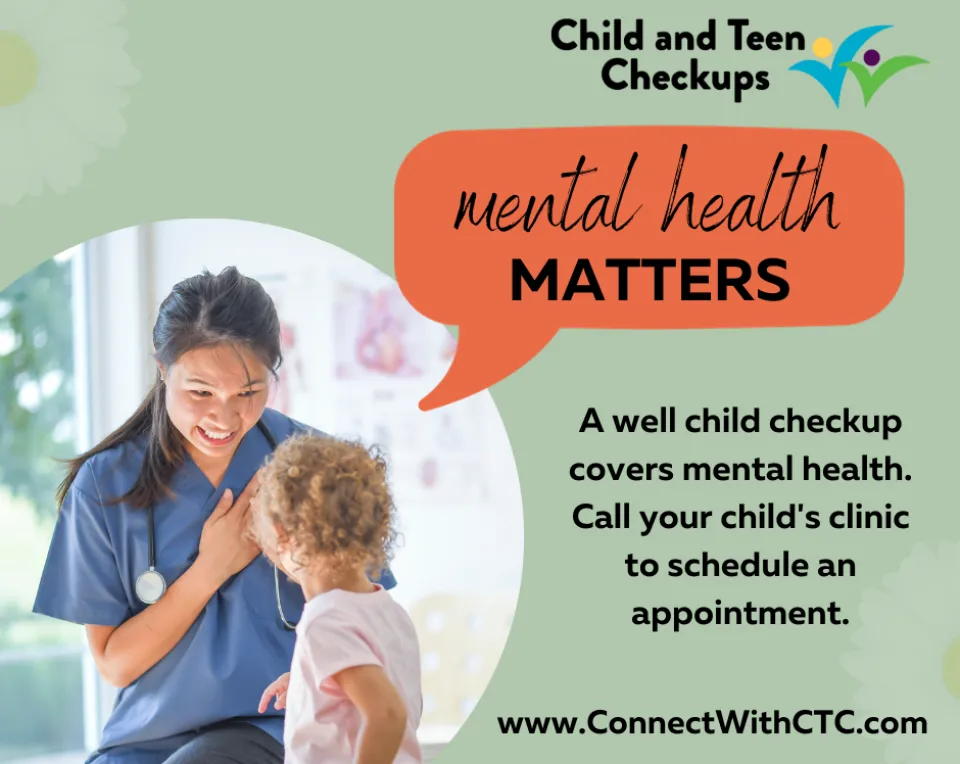
Child and Teen Checkups

Email: CTC@olmstedcounty.gov
Phone: 507-328-7500
Find out more at Connect with CTC.
The Child and Teen Checkups (C&TC) Program helps families:
- Find a medical clinic.
- Find a dental clinic.
- Schedule appointments.
- Arrange transportation.
- Assist with an interpreter.
- Understand what happens at a checkup.
- Help connect to community resources (e.g., connect with WIC Nutrition Program or Head Start).
What happens at a checkup:
- Lab tests.
- Immunizations (shots).
- Screening for lead.
- Vision and hearing tests.
- Referral to a dentist and fluoride varnish (to help prevent tooth decay).
- Development and behavioral screenings.
- Social-emotional and mental health screenings.
- Height, weight, and other growth measurements.
- Education about the next stage of your child or teen's growth and development.
- Time with your health care provider to talk about your questions and concerns.
Your child should receive regular checkups from birth to age 20.
Child and Teen Checkups meet the health requirements for Head Start, WIC, school, sports, or childcare. Be sure to bring any forms you need filled out with you to your appointment.
To schedule a well-child exam, contact your child's healthcare provider:
- Olmsted Medical Center: 507-288-3443
- Mayo Clinic: 507-284-2511
- CHSI (Community Health Services, Inc.), Clinics: 507-529-0503
School Public Health Nursing Services
Public Health nurses assist in health assessments, counseling, and referral services for school children in all schools, and provide age-specific health topic teachings to all grade levels in all public and private schools in the county.
Public Health nurses specializing in School-Age Services are available to support the needs of school-age youth and their families. If you are a youth or a caregiver of a youth with medical, dental, or other concerns, please use a referral form to connect with a nurse. Your information will be kept confidential, and you will receive a response within two business days.
Children of Incarcerated Caregivers
Here in Olmsted County, 1 in 7 children are impacted by a caregiver who is currently or has been incarcerated. Children and teens often have questions when a loved one is in jail or prison, and it's okay if we don't always have the answers.
The Children of Incarcerated Caregivers program is here to support caregivers and offer guidance on how to navigate tough conversations. We also provide a safe space for children to connect with others. To sign a child up for this program, fill out our referral form.